I'm Wang Zhong, though most people know me as Garfield. I started in radio at HIT FM and Hong
Kong U Radio, first as a host and music curator. Later I carried that sense of timing and
judgment into product work, building PILO, the sleep music pillow, and Run Baby Run®, the
cadence-based project Nike used for the Shanghai Marathon.
Today I am pushing the same discipline into AI. Talktalk is the prompting system I am building for
hosts and creators who want smoother delivery and stronger narrative control. In parallel, I am
exploring automatic mixing systems for sleep, focus, and performance. I also served as a juror in
the sound category at the 47th Emmy Awards.
Turning the feeling of nighttime companionship into a product the market could actually test.
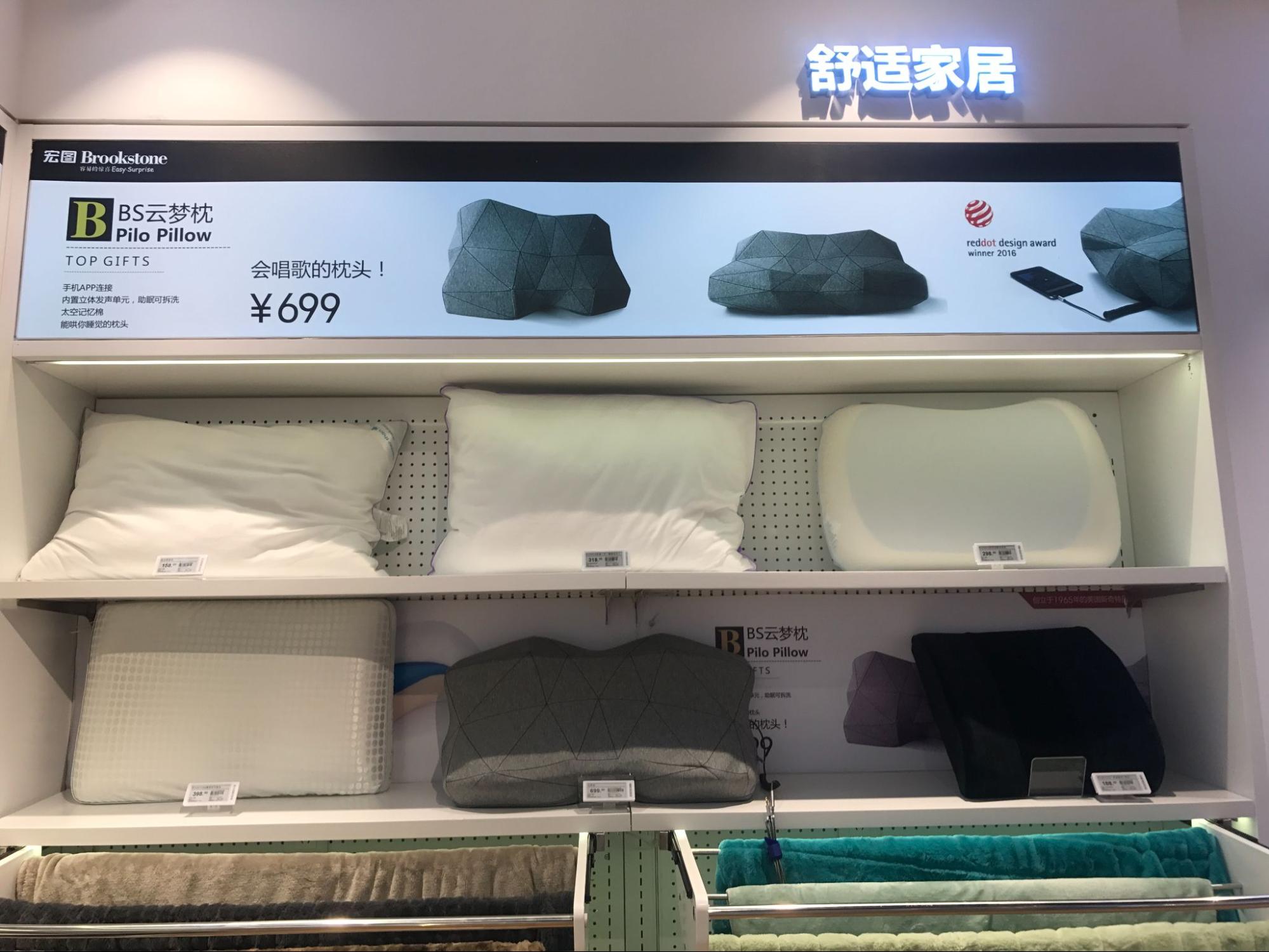
The challenge was never purely technical. PILO had to reconcile comfort, sound, appearance,
and market acceptance all at once. I was not interested in a beautiful concept object that
only worked in a design show. It had to be something you would actually sleep on, night after
night.
Red Dot, A' Design, Golden Pin, Plus X, and K-Design mattered not because they made a long
award list, but because very different juries arrived at a similar conclusion: the product had
been thought through.
It entered Brookstone China, went onto JD, and later sold through Amazon in the US and Japan.
Retail is a blunt but honest test.
Turning cadence into a sound project that could live inside training and race culture.
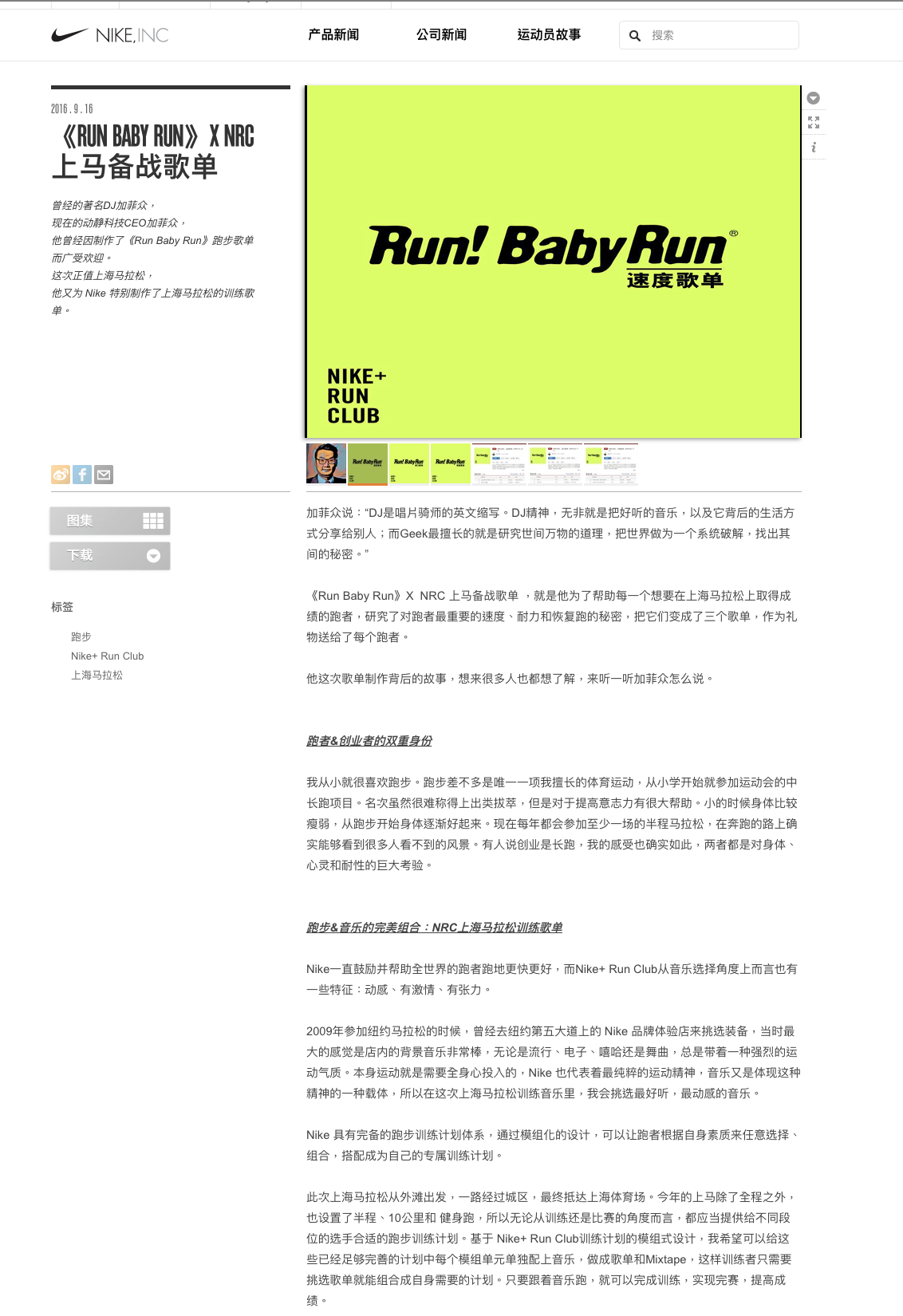
Run Baby Run® started with a question I had while running: could rhythm guide pace, so sound
became part of training rather than mere background? Over time it grew into a cultural IP that
Nike used for the Shanghai Marathon, where it became the official soundtrack and entered the
runner training materials.
What matters to me is not the collaboration alone. It is that a personal idea was designed
from day one for a real use case, then found its way into brand and race infrastructure
without losing its original logic.
Talktalk, and the AI audio systems taking shape around it.
Talktalk is a prompting system for hosts and creators who want smoother expression and
stronger narrative control. It starts with the moments where expression stalls in real life,
not with a generic feature checklist. Currently serving Chinese-speaking podcast hosts and
spoken-word creators with prompting, pacing control, and segment navigation.
Alongside it, I am exploring automatic mixing systems for sleep, focus, and performance. The
stack is changing, but the underlying job is the same: make sound more useful, more intimate,
and more effective.
What I do best is not talking about an idea. It is turning it into a product.
I am best at taking a vague need, shaping it into a complete product, and getting it into the right context.
01
Knowing what earns attention
Radio trained me to tell, quickly, what stays with people and what gets skipped. That
instinct turned out to be even more valuable in product design than it ever was on air.
02
Making feelings tangible
PILO was never just a render. It was a product people could touch, buy, and live with.
Turning words like comfort, companionship, and privacy into an object is harder than it sounds.
03
Designing for adoption
Nike, retail placement, and press were not lucky aftereffects. They were outcomes considered
from the start. A product's destiny should be designed into it.
How others saw it
Media, institutions, and collaborators offered a second reading of the work.
Media view
What they noticed was not only the product, but the judgment that made it hold together.
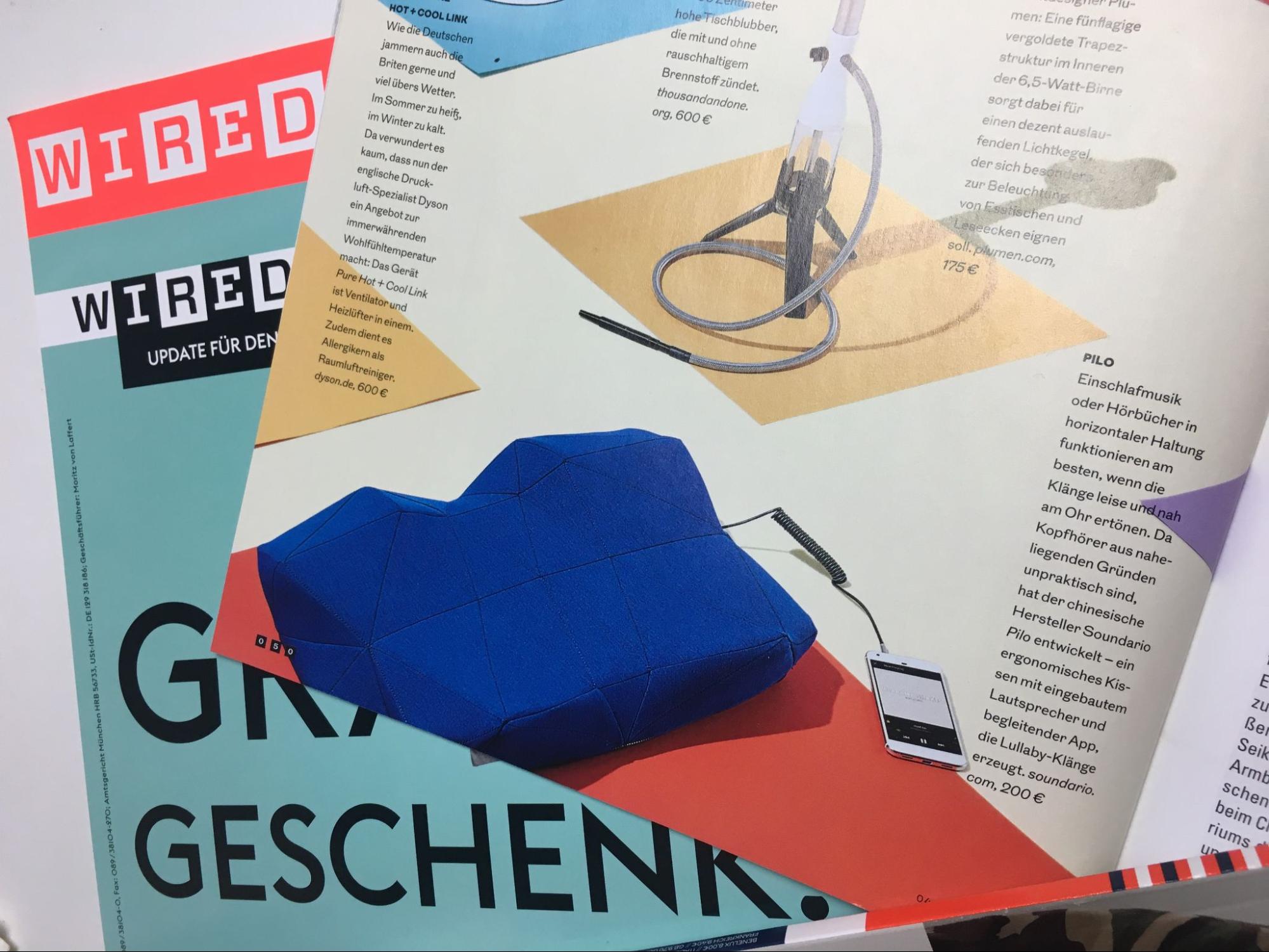
Across Wired, Men's Health, Cosmopolitan China, and New Weekly, the pattern was consistent.
The coverage was not just about an object. It was about how sound, design, and context were
made to work together.
Public validation
Awards, distribution, and partnerships turned private conviction into public proof.
From the outside, these signals matter because they show the work surviving contact with
juries, retailers, and real-world use.
That invitation came from inside the field: a sign that my perspective on sound extends beyond
broadcasting into product and use.
Timeline
From attention to products to systems.
2006HIT FM
The starting point was not entrepreneurship. It was learning what was worth hearing.
2014Soundario
The shift from programming media to building a company around sound.
2016PILO + Nike
PILO launched and Run Baby Run® was adopted by Nike. That was the first time the method was
validated by both market and brand.
NowTalktalk / AI audio systems
Same judgment. New infrastructure. New product forms.
Contact
If you are building in sound, let's talk.
If you are building in audio, creator tools, or AI experiences, and care about turning fuzzy human needs into usable products, I would be glad to talk. You can also follow the rest of the public trail here.